_-_002.jpg)
Living the American Jewish Experience Inaugural Lecture
THE SCOURGE AND THE SURGE
Post-October 7 American Jewry in Historical Perspective
Tuesday, January 7, 2025 | 7–9 PM
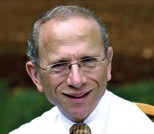
Featuring
Dr. Jonathan D. Sarna
Renowned Professor of American Jewish History, Brandeis University
This annual free lecture is generously funded by the Marcia & Barry Silverberg Fund of the Shalom Austin Jewish Foundation
Jonathan Sarna is the University Professor and the Joseph H. & Belle R. Braun Professor of American Jewish History at Brandeis University, where he also served as the Director of the Schusterman Center for Israel Studies. He is the author or editor of over 30 books, including the acclaimed American Judaism: A History.
Lecture series sponsors, Marcia and Barry Silverberg, noted in their introduction of Dr. Sarna: "When we created this lecture series, we knew there was only one person who could bring the experience, knowledge, and gravitas we wanted for the inaugural lecture."
Introduction
Almost a quarter of a millennium ago, on April 13, 1783, the pioneering Savannah Georgia patriot, Mordecai Sheftall, wrote to his "dear son" Sheftall about the Treaty of Paris that ended the American Revolution.
MORDECAI SHEFTALL TO SHEFTALL SHEFTALL - AFTER TREATY OF PARIS
April 13, 1783
"Thanks to the Almighty it is now at an end. An entire new scene will open itself, and we have the world to begin again."
"Every well-wisher to his country must feel himself happy to have lived to see this long and bloody contest brought to so happy an issue," he wrote. "Thanks to the Almighty, it is now at an end . . .an intier [entire] new scene will open itself, and we have the world to begin againe."
As we contemplate a new ceasefire and perhaps the end of the October 7th War set off by Hamas, it seems to me that we too find an "entire new scene" opening for Jews here in the United States, and in some respects we too "have the world to begin againe."
In this lecture, I want to describe that "new scene," focusing on four themes: first, the consolidation of world Jewry; second, the bifurcation of American Jewry; third, the resurgence of antisemitism; and finally, what has come to be known as "the surge," the explosion in Jewish belonging and communal participation that has been described as "nothing short of historic." I leave this, the best news, until the end. First, though, let us look at the Jewish world that is, in a sense, beginning again, in the wake of October 7.
1. The Consolidation of World Jewry
The Jewish population of the world peaked in 1939 at about 16.7 million Jews. 85 years later, we still have not equaled that number.
WORLD JEWISH POPULATION OVER TIME
Distribution of Jewish population in the world by major areas—1170-2023.
Source: DellaPergola 2020; 2001-2023: Lestschinsky 1929, SEBal Schmelz 1970; and author's processing.
[Chart showing distribution across: Oceania, Latin America, North America, Africa, Asia, West Europe, Palestine/Israel from 1170 to 2023]
About half of those Jews (8 million), in 1939, lived in Eastern Europe; over a quarter (4.7-4.8) lived in North America; almost 450,000 lived in the land of Israel/ Palestine; and the rest – 3.5 million – lived in Australia-New Zealand, Latin America, Africa (mostly South Africa), Asia, and Western Europe. Jews, on the eve of World War II, were a world-wide people spread across every inhabited continent.
Compare that with World Jewry today. As you can see on the last bar of the same chart, East European Jewry has essentially vanished: owing to the Shoah, the Exodus of Jews from the former Soviet Union, and now the Russian Ukrainian War. Asian Jews – meaning the Jews in India, Iran, Turkey and Arab lands – have mostly vanished too; you can find the majority of them in Israel, some in the US. Jewish communities in most of the other parts of the world, like South Africa, Latin America and Western Europe, you can see, have greatly shrunk. The vast majority of the world's Jews now live in just two locations: North America and Israel.
CONSOLIDATION OF WORLD JEWRY
1950 WORLD JEWISH POPULATION
USA 5,000,000 44.26%
Israel 950,000 8.40 %
Rest of World 47.34% (incl USSR, 17.70%)
2021 WORLD JEWISH POPULATION
USA 6,000,000* 39.6%
Israel 6,870,900 45.3%
Rest of World 15.1%
[2024 – US + Israel = 90%; rest = 10%]
Here you can see the changes in numbers and percentages just since 1950 (after the Shoah). While recent numbers are hard to come by, and partly depend on whom you count as a Jew, the conclusion is beyond dispute: In 2025, about 90 percent of world Jewry live in North America and the State of Israel. Jews are no longer an "am olam," a global people spread "from one end of the world even unto the other," and Judaism is no longer a global religion.
Instead, while Christianity and especially Islam have been spreading out, worldwide Jewry has been consolidating.
We have become a people and a faith of the First World.
We have cast our lot with the most developed countries on the face of the earth. The inevitable result is that everybody else – the poorer, less developed, countries of the world do not know Jews or Judaism first-hand; they only know what they see and hear in the media. Moreover, if they have been taught to hate the First World, they probably hate Jews too.
IMPLICATIONS OF CONSOLIDATION
- Jews no longer a worldwide people; almost entirely a first world people, with diaspora outside USA declining
- People outside the first world scarcely know Jews or Judaism.
- Two significant interdependent Jewish centers – Israel & US, akin to Babylon & Jerusalem in antiquity (bavel veyerushalayim)
- More jews than ever before have lived in both countries or even commute.
All of this has become immensely important in the "entire new scene" that opened in the wake of October 7th. People of the Third World and those sympathetic to the Third World interpreted those events of October 7th through the prism of their ideology; to them it was a revolt of formerly colonized people against their oppressors in the First World. Iran, Russia, and many of the third-world countries in the United Nations propounded this view.
So, did professors of colonial studies and lots of people with roots in the third world here in the United States. Their goal was to strike a blow for the Third World by weakening Israel.
We now know that they deeply miscalculated.
Iran, Hamas, Hizballah, Syria and their allies have been deeply weakened by this war instead.
What is crucial for us to remember, though, is that this war has underscored the new shape of world Jewry: we are now a people with a great homeland center in Israel, and a great diaspora center in the United States: both roughly the same size.
These two centers – a modern day parallel to Bavel Veyerushalayim (Babylon and Jerusalem) in antiquity -- have become increasingly interdependent. Displaced Israelis knew that they could find temporary homes in America's Jewish communities. American Jews knew that they had to turn out for Israel in what became one of the largest demonstrations ever held in Washington on November 14, 2023, and have also been extremely generous in their donations to Israel since the war began.
In addition, a great many Jews have relatives and friends in both countries, travel back and forth frequently, may study, live and work for some period of time in both countries, and strive financially, politically and culturally to strengthen the Jewish communities of both countries. Many challenges remain, of course.
American Jews need to understand Israel better, and Israeli Jews need to understand American Jewry much better than they do. But it should already be clear that the geography of world Jewry in the years to come will be entirely different from what it has been for a thousand years when Jews were far less concentrated and more scattered across the globe.
We have only just begun to adjust to this new reality.
2. The Bifurcation of American Jewry
This brings me to my second theme – also reflecting a new reality: the bifurcation of American Jewry. For a long time, American Jews believed that for all of their differences – Reform, Conservative, Orthodox; Ashkenazim and Sephardim; German Jews and East European Jews and so forth – Jews agreed upon essential matters: what the late Jonathan Woocher once called Civil Judaism.
They believed in Jewish Peoplehood, in a sense of Mutual Responsibility, in attachment to Israel, and in Jewish continuity, they wanted their grandchildren to be Jewish.
What October 7th has highlighted, however, is that Jews no longer do agree on these matters. Indeed, the Jewish people is increasingly bifurcated along religious, educational and marital lines.
THE BIFURCATION OF AMERICAN JEWRY
1. ALONG RELIGIOUS LINES – Orthodox & observant, non-Orthodox & non-observant
"two sharply divergent expressions of Jewishness appear to be gaining ground – one involving religion deeply enmeshed in every aspect of life, and the other involving little or no religion at all." [Pew 2020]
2. ALONG EDUCATIONAL LINES – Jewishly well-educated; Jewishly ignorant
"Even as the estimated number of Jewish children in the United States rose by 17% between 2000 and 2020, enrollment in Hebrew schools fell by at least 45% between 2006 and 2020, according to the report by the Jewish Education Project." [JTA, April 19,2023]
3. ALONG MARITAL LINES – in-married, out-married
Religiously, according to the Pew Foundation's careful, non-partisan study of the Jewish community, "two sharply divergent expressions of Jewishness appear to be gaining ground – one involving religion deeply enmeshed in every aspect of life, and the other involving little or no religion at all."
In religion, as in American society generally, the middle ground has eroded, and polarization has set in. There is a deep chasm between the religiously engaged and the religiously disengaged.
The same is true with respect to Jewish education; indeed, those two categories (religion & education) overlap.
On the one hand, more American-born Jews than ever before boast extensive Jewish education: including Jewish pre-school and day school and educational summer camps, and year-in-Israel programs. These young people study Hebrew, and the Bible, and Jewish history and sacred Jewish texts: they are Jewishly knowledgeable.
On the other hand, we have more and more young Jews who hardly possess any Jewish education at all. An astonishing recent study showed that "Even as the estimated number of Jewish children in the United States rose by 17% between 2000 and 2020, enrollment in Hebrew schools fell by at least 45%."
Once again, the middle – Jews who went to supplementary Hebrew and Jewish high school programs multiple times a week, once an impressive percentage of the community – that middle group has largely disappeared. Young American Jews today (and my experience at Brandeis confirms this): are either deeply knowledgeable or completely illiterate Jewishly.
INTERMARRIAGE MORE COMMON AMONG JEWS MARRIED MORE RECENTLY
% of married U.S Jews with a non-Jewish spouse, by year of marriage
Non-Orthodox married Jews (2010-2020)
Before 1980: 18%/18%
1980-1989: 32%/45%
1990-1999: 37%/41%
2000-2009: 46%/54%
2010-2020: 61%/72%
Note: Based on current, intact marriages. Does not include past marriages that ended in either divorce or the death of a spouse.
Source: Survey conducted Nov. 19, 2019-June 3, 2020, among U.S. adults.
"Jewish Americans in 2020"
PEW RESEARCH CENTER
The American Jewish community is also bifurcated along marital lines: Jews married to Jews, and a growing number of Jews married to non-Jews.
Over 70% of non-Orthodox Jews married since 2010 are married to non-Jews, as the Pew Foundation chart authoritatively demonstrates. Increasingly, those two groups – those married to Jews and those married to non-Jews – diverge on the critical values that not so long ago all agreed upon.
IMPLICATIONS OF HAVING A NON JEWISH SPOUSE (Pew 2020)
- • Jewish Peoplehood – 95% of Orthodox Jews feel a deep sense of belonging to the Jewish people. By contrast, "Jews of no religion," and Jews who affiliate with no particular branch of Judaism – over two-thirds of whom are married to non-Jewish spouses – overwhelmingly rate their sense of belonging to a wider Jewish community in terms like "none," "not much" or "some."
- • Mutual Responsibility – 95% of Orthodox Jews and 87% of all "Jews by Religion" answer "some" or "a great deal." Among "Jews of no religion," fewer than two-thirds feel this responsibility.
- • Attachment to Israel – Two-thirds of Orthodox and Conservative Jews report that they are "very" or "somewhat" attached to Israel. Two-thirds of "Jews of no religion" report that they are "not too" or "not at all" attached to Israel.
- • Importance of Jewish Continuity ("that your grandchildren be Jewish"). Orthodox – 91%, Conservative- 62%, but only 4% of Jews of no religion.
Two-thirds of Orthodox and Conservative Jews report that they are "very" or "somewhat" attached to Israel. Two-thirds of "Jews of no religion" most of them with non-Jewish spouses, report that they are "not too" or "not at all" attached to Israel.
These differences played out before our eyes on college campuses in the weeks and months following October 7.
3. The Resurgence of Antisemitism
Antisemitism has a long, ugly history in the United States dating back to founding of the Jewish community in colonial times.
It peaked during the inter-war years of the twentieth century, when, for example, automaker Henry Ford, influenced by the Protocols of the Elders of Zion, portrayed "the international Jew" as "the world's foremost problem:
The Ford International Weekly
THE DEARBORN INDEPENDENT
By Ford Dealer
The International Jew: The World's Problem
The article that signaled the beginning of Henry Ford's seven-year hate campaign against the Jews. (COLLECTIONS OF THE HENRY FORD MUSEUM, GREENFIELD VILLAGE)
"The Jew is a race that has no civilization to point to, no aspiring religion, no great achievement in any realm."
RADIO PRIEST
CHARLES COUGHLIN
THE FATHER OF HATE RADIO
NAZIS OF COPLEY SQUARE
THE FORGOTTEN STORY OF THE CHRISTIAN FRONT
The pioneering radio priest, Father Charles Coughlin, now known to have been in the pay of the Nazis, preached to tens of millions of listeners that Jews were both international financiers and Communists undermining America.
Lindbergh Says Jews Agitate War
Declares British and Roosevelt Also Have Planned 'Incidents'
Des Moines, Iowa, Sept. 11.—Charles A. Lindbergh charged Thursday night "the three most important groups which have been pressing this country toward war are the British, the Jewish and the Roosevelt administration."
Famed aviator Charles Lindbergh alleged that Jews, instead of placing America first were conspiring to force the country into war against Germany.
"Always a View, Never a Jew."
DISCRIMINATION AGAINST JEWS
1930s ad in Miami: Jewish Museum of Florida/ JTA OCTOBER 23, 2013 Uriel Heilman
During these years, discrimination against Jews in housing, employment, clubs, hotels and universities was commonplace and rampant.
Following World War II, however, American antisemitism declined as consciousness of the destruction of European Jewry rose and Americans sought to distinguish themselves, ideologically, from the Nazis whom they had just defeated.
POSTWAR DECLINE OF ANTISEMITISM
- • Antisemitism declined decade by decade from 1950-2000.
- • Many believed that it would become marginal, akin to anti-Catholicism and anti-Mormonism
- • Leonard Dinnerstein, Antisemitism in America 1994 - "Antisemitism has declined in potency and will continue to do so for the foreseeable future."
- • Some argued passionately that the American Jewish community should defund "defense" agencies and put the money into strengthening Jewish life internally.
Antisemitism continued to wax and to wane, but by every measure, it declined decade by decade. By the time I was growing up, in the early 1960s, almost all resorts and housing developments had dropped their restrictive clauses against Jews; antisemitic college quotas had mostly ended; and professional fields like law, medicine and banking proved more receptive to Jews than at any previous time in the twentieth century.
The former director of the Anti-Defamation League, Benjamin R. Epstein, described the years following World War II as a "golden age" for American Jews, one in which they "achieved a greater degree of economic and political security, and a broader social acceptance, than had ever been known by any Jewish community since the [ancient] Dispersion."
Antisemitism did not disappear completely, of course, but young Jews grew up believing that most prejudice in America was directed at "People of Color," such as Blacks and Hispanics, while Jews, as a famous book put it, had become "white folks."
When Professor Leonard Dinnerstein published the first and only scholarly history of American antisemitism, in 1994, his book ended on a hopeful note:
"Greater tolerance and acceptance of diversity in the United States," he concluded, "showed that antisemitism "has declined in potency and will continue to do so for the foreseeable future."
In the year 2000, a volume actually appeared with the arresting title The Death of American Antisemitism (by Spencer Blakeslee).
Just as anti-Catholicism and anti-Mormonism had greatly receded in the United States, so many people – young Jews in particular – believed that antisemitism in America was basically over. Comedian Jerry Seinfeld recently confessed that in the 1990s, when he produced his famous sitcom, Seinfeld, he believed that "antisemitism was a relic – seemingly a relic of history books." A whole generation of Americans, including Jews, grew up believing that too.
Far-sighted Jewish leaders began to detect change in the wake of September 11th, 2001. Osama Bin Laden, and his organization, 'Al Qaeda, they learned, had Israelis and Jews in their sights.
The digital revolution, they came to understand, made it possible for extremists, terrorists, haters and subversives of every kind to find one another, interact, share intelligence, and promote hatred in new and dangerous ways.
Those who listened in on this "internet chatter" detected a growing volume of antisemitism, and threats to Jewish institutions worldwide.
So, in 2004, the Jewish Federation of North America and the Conference of Presidents of Major American Jewish Organizations quietly established what they called the "Secure Community Alert Network," in conjunction with America's new Department of Homeland Security.
Initially, this was a small organization, and it dealt with all kinds of emergency preparedness. Later, however, it began to monitor and protect against antisemitism in real time. Sadly, its staff have become very busy.
2004 - Secure Community Alert Network (SCAN; Later SCN), created by the Jewish Federations of North America (JFNA) and the Conference of Presidents of Major American Jewish Organizations in conjunction with US Dept of Homeland Security to instantly alert Jewish institutions to terrorist and other threats. - Reflects 9/11 consciousness and a recognition that the Digital Revolution had begun to transform terrorists and hate groups from a marginal to a mainstream phenomenon.
2016 – Presidential election riddled with antisemitic memes.
2017 – Charlottesville - "Jews will not replace us"
2018 (October 27) – Tree of Life Synagogue, Pittsburgh – Mass Shooting left eleven people dead and seven wounded, the deadliest attack ever on a US Jewish community.
2019 (April 27) – Poway Synagogue Shooting
2019 (December 29) – Hanukah Attack in Monsey
2022 (January 15) – Colleyville, TX – Rabbi and three congregants taken hostage
2023 (June 16) – Threatened attack on Cong. Shaarey Zedek (E. Lansing) averted
In 2016, the Washington Post detected a strong under-current of antisemitism in some of the attacks on Hilary Clinton. "Anti-Semitism is no longer an undertone" of the presidential campaign, it reported, "it's the melody."
The next year witnessed a "unite the right" rally in Charlottesville, Virginia where marchers yelled "Jews will not replace us," an allusion to White Replacement advocates' charge that Jews, whom they claim only pretend to be White People, are aiding the effort to assist immigrants from Latin America and thereby undermine White Civilization.
On the extreme right in America, Jews are today attacked for imitating white folks and undermining white civilization in favor of people of color, while on the extreme left, they are attacked as powerful white folks who promote the white power structure and should be shunned by people of color.
The mass shooting of eleven congregants on October 27, 2018, at Pittsburgh's Tree of Life synagogue confirmed that antisemitism was back; the attack stands as the deadliest ever on a US Jewish community.
And the attacks did not end. Even if they have not made the news, practically every day for the past six years the Secure Community Network has carried reports of some antisemitic incident, or of an attempted one thwarted just in the nick of time.
Still, nobody expected to see the breadth and depth of antisemitism that we have all witnessed since October 7, 2023.
Different national surveys offer different numbers, but all agree that overt antisemitism has skyrocketed in the US.
The Anti-Defamation League counted some 10,000 antisemitic incidents in the year after October 7. It is the highest number of antisemitic hate crimes since ADL started tracking in 1979.
The incidents recorded from October 7, 2023, to September 24, 2024, represent a more than 200% increase compared with the year before.
Impact of October 7th
• New York, NY, November 29, 2023
A new study released today from ADL (the Anti-Defamation League) and Hillel International found 73 percent of Jewish college students and 44 percent of non-Jewish students have experienced or witnessed antisemitism since the start of the 2023-2024 school year. By comparison, a prior survey conducted in 2021 found that 32 percent of Jewish students experienced antisemitism directed at them, and 31 percent of Jewish students witnessed antisemitic activity on campus that was not directed at them.
• Boston Globe 2024/03/11
More than one-quarter of Jewish college students who participated in a new survey by a Tufts researcher [Eitan Hersh] feel they need to hide their Jewish identity to fit in on campus, almost double the share who felt that way in 2022. A majority said Jews on campus face a "social penalty" if they support the existence of Israel as a Jewish state, a widely shared position among American Jews. And approximately one in five non-Jewish students who took the survey seemed to confirm that belief, saying they wouldn't befriend someone who supports Israel's existence.
As a result, something like two-thirds of American Jews report feeling less safe than they did a year ago.
More than 40% have changed their behavior – on the street and online – to avoid being recognized as Jews and targeted. Jewish institutions today spend tens of millions of dollars simply to keep Jews safe.
On many college campuses, meanwhile, Jews do not feel safe.
According to an important scholarly survey by Professor Eitan Hersh, 40% of Jewish students report that they have been personally targeted with antisemitic messages, and "a substantial share" of the college-age Jewish population feels they incur a social penalty for being Jewish, for attending Jewish programs, and for supporting the right of Israel to exist as a Jewish country.
Significantly, Professor Hersh found, a substantial share of the non-Jewish population on college campuses "endorses that social penalty."
4. The "Surge"
Historically, eras of antisemitism have stimulated Jewish awakenings. Attacked from the outside, Jews turn inward, embrace one another, and work to strengthen Jewish life.
That is what happened, according to tradition, in ancient Persia in the wake of the decrees of the wicked Haman. It also happened here in America, in the late nineteenth century, when discrimination against Jews became commonplace, and American Jews experienced "a great awakening."
It happened again in 1930s Germany, when the Jewish Lehrhaus, Schocken Books, and other Jewish institutions sprang up to welcome in Jews just when so many others in the early Hitler years expelled them.
And now it is happening again in our day, as we witness what has been described as "an explosion in Jewish belonging and communal participation that is nothing short of historic."
Dubbed "the surge" by the study's authors, this widespread rise in communal participation is evident at every level of American Jewish life and especially among young people and Jews in their prime.
A whopping forty percent of Jews who once described themselves as somewhat or not at all engaged in American Jewish life are now showing up at Jewish events (like this one) in larger numbers; as a result, the number of "deeply engaged" Jews in America, according to the study, has actually doubled.
Hillel reports the highest number of Jews engaged in their activities ever in their history.
Chabad houses have witnessed a forty percent increase in their attendees.
A recent survey from Prizmah, the Center for Jewish Day Schools, showed that fully 60 percent of responding schools had new students enrolled specifically "as a result of the change of climate since October 7." That means that we can anticipate, in the years ahead, an American Jewish community that is better educated, Jewishly, than the current one.
Jewish camps tell a similar story - "a renewed sense of focus, vigor, and energy…across North America."
Even conversion numbers are way up – so much so that an article on the phenomenon recently appeared in the December 2, 2024, New Yorker [Jeannie Suk Gerson].
Some of those "non-Jewish spouses of Jews" whom I mentioned earlier, now seek to prove their love by converting to the faith of their persecuted husband or wife.
At the community mikvah in Boston, Mayyim Hayim, immersions for conversion are up by 50 percent. Rabbi Adam Mintz, a New York Orthodox rabbi, reports that his conversion numbers in 2024 are up more than 100 percent.
Nationwide, according to the Haaretz newspaper, there has been "An unprecedented spike in the number of people interested in converting or enrolling in conversion classes."
Relatedly, and perhaps for the first time in a century, there are indications that intermarriage numbers are edging down, as more young Jews look to marry other Jews, people who can understand and support them in these difficult times.
In short, as we contemplate the American Jewish experience, we see that today, just as after the American Revolution, an entire new scene is opening up in American Jewish life: "we have the world to begin again."
Nobody can predict how the current revival will play out or what its long-lasting impact will be. Much, of course, will depend upon us and our actions in the years ahead.
What we can say today is that a continuing pattern in Jewish history is being reenacted before our eyes. Those who seek to undermine Jewish life are, paradoxically, stimulating its revitalization.