
_-_002.jpg)

TIMELINE OF AUSTIN JEWISH HISTORY
Timeline of Austin Jewish Community in the American Jewish Historical Context
1849 – Present
A Living Timeline of Community, Continuity, and Change
This timeline traces the development of the Jewish community in Austin within the broader sweep of American Jewish history. It is intended as a living document. The Greater Austin Jewish Historical Society (GAJHS) welcomes suggested additions, corrections, and resources that can deepen this shared historical record. Please contact barry@austinjewishhistory.org.
Read the Timeline
1840s–1890s
From First Arrivals to an Organized Community
National Context
Across the United States, German Jewish immigrants settle in growing towns and cities. Communities establish cemeteries, benevolent societies, and Reform congregations. Fraternal organizations such as B'nai B'rith flourish, and Reform Judaism becomes the dominant expression of Jewish life in America.
Austin Story
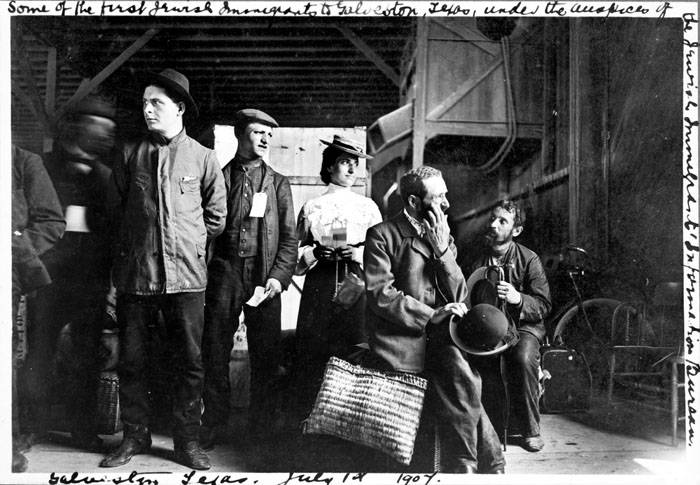
Jewish life in Austin begins quietly, with a small number of merchants, shopkeepers, and civic-minded newcomers arriving in the decades following the city's founding. Religious life initially centers in private homes and rented halls. By the 1870s, the community has grown large and stable enough to organize formally—marking the beginning of lasting Jewish institutions in Austin.
- 1849 – Phineas de Cordova appears in the earliest Jewish record connected to Austin. Invited by Governor Peter Bell to help attract immigrants to Texas, he opens a land company with James McKinney and becomes an early civic leader.
- 1850s – The first Jewish settlers arrive, primarily German immigrants engaged in trade and commerce.
- 1866 – The first documented Jewish religious service in Austin is held in a private home.
- 1866 – A Jewish cemetery is established, signaling communal permanence.
- 1872 – The Hebrew Benevolent Association is founded as Austin's first Jewish charitable organization. Its attempt to raise funds for a synagogue is unsuccessful, and the group later disbands.
- 1874 – Congregation B'nai Shalom is formed.
- 1875 – The Austin Lodge of B'nai B'rith becomes the city's first permanent Jewish organization.
- 1876 – Congregation Beth Israel is established. Thirty people attend the founding meeting. Beth Israel becomes Austin's first enduring synagogue and a center of Reform Jewish life.
- 1880 – An initial attempt to form a Young Men's Hebrew Association (YMHA) fails.
- 1880 – Endowment Rank, Knights of Pythias, Section 635 is organized. Though not exclusively Jewish, its leadership and membership are largely Jewish.
- 1884 – Congregation Beth Israel constructs its first purpose-built synagogue at 11th and San Jacinto Streets, a major milestone in visibility and permanence.
- 1893 – Friends of Israel and the Young Hebrew Literary Society are founded by Jewish women to promote education and social connection.
- 1894 – The YMHA is briefly reestablished but dissolves within two years.
- Late 1800s – Jewish Austinites become prominent in retail, real estate, and local government.
1900s–1930s
Building Communal Infrastructure and New Traditions
National Context
Mass Eastern European Jewish immigration reshapes American Jewish life. Orthodox congregations, Zionist organizations, women's aid societies, and campus-based Jewish groups emerge nationwide.
Austin Story
As Austin grows, Jewish communal life expands beyond worship into philanthropy, education, and student life. New arrivals—particularly from Eastern Europe—introduce more traditional religious practices, broadening the city's Jewish expression.
- 1900–1920 – Eastern European Jewish immigrants arrive, bringing Orthodox traditions alongside the established Reform community.
- 1906 – The Harmony Club is formed as a short-lived Jewish social organization.
- 1906 – Workers of Zion is organized as an affiliate of the Federation of American Zionists.
- 1907 – Austin's Jewish population is estimated at approximately 200.
- 1907–1924 – The Hebrew Benevolent Society operates as a central Jewish charity, assisting immigrants, supporting families in need, and strengthening communal solidarity. It is the precursor to today's Shalom Austin.
- 1912 – The Texas Zionist Association holds its convention in Austin.
- 1913 – The Menorah Society is founded at the University of Texas, serving a Jewish student population of roughly thirty.
- 1914 – Congregation Agudas Achim is founded to serve Eastern European Jews seeking more traditional worship. Services initially take place in private homes.
- 1915 – Jewish women organize the Ladies Guild, later affiliated with the National Council of Jewish Women.
- 1920 – The Jewish population reaches approximately 500.
- 1921 – The Council of Jewish Women is established in Austin.
- 1924–1939 – Jewish charitable efforts led by the Hebrew Benevolent Society until then, are consolidated into the Federation of Jewish Charities, reflecting a national trend toward coordinated communal philanthropy.
- 1927 – The Hillel Foundation at the University of Texas is established, succeeding the Menorah Society.
- 1928 – Austin's Jewish population is estimated at 490, about 1.3% of the city's total population.
- 1939 – The Jewish Community Council of Austin is formed to coordinate activities among local Jewish organizations. It succeeds the Federation of Jewish Charities.
1940s–1970s
Stability, Growth, and Institutional Maturity
National Context
The Holocaust devastates European Jewry. The establishment of the State of Israel reshapes Jewish identity worldwide. In the United States, Jewish federations professionalize social services and expand education and community centers.
Austin Story
Austin's Jewish population remains modest but stable, maintaining institutions while expanding social services, education, and Israel-centered programming.
- 1948 – Congregation Agudas Achim joins the Conservative Movement.
- 1952 – BBYO becomes Austin's first successful Jewish youth organization.
- 1954–1956 – The Austin Jewish Federation evolves into the Jewish Community Council of Austin, expanding programs in education, childcare, and senior services. It moves to an office building on Balcones Road.
- 1955 – The Jewish Community Center opens, providing cultural, recreational, and educational programming.
- 1956 – Jewish Community Council sponsors an event where well-known Jewish authors, poets, comics, and artists speak.
- 1962 – Congregation Beth Israel relocates to a larger campus on Shoal Creek Boulevard.
- 1963 – Congregation Agudas Achim dedicates its Bull Creek Road synagogue, drawing national attention due to the planned participation of Lyndon Baines Johnson, who had committed to the event as Vice President. The dedication was postponed following the assassination of John F. Kennedy, making the congregation the second American synagogue dedicated by a president; the first was Washington Hebrew Congregation, whose buildings or cornerstones were dedicated by Presidents McKinley, Truman, and Eisenhower.
- 1964 – The Jewish Community Council establishes a preschool.
- 1968 – The Austin Jewish Day School is founded (later closed).
- 1973–1974 – Chabad is established at the University of Texas and purchases its first building.
- 1976 – The Jewish Community Council hires its first executive director/clinical social worker.
1980s–2000s
Boomtown Austin and the Dell Jewish Community Campus
National Context
Jewish populations shift toward Sun Belt cities. Federations increasingly develop multi-use community campuses.
Austin Story
Tech and rapid population growth transforms Jewish life in Austin. New congregations form, institutions expand, and a shared community campus reshapes communal geography.
- 1981 – Jewish Outlook begins publication.
- 1981 – Congregation Beth Shalom is established as a conservative synagogue.
- 1984 – Jewish Community Council of Austin opens a permanent home at 11713 Jollyville Road and Early Childhood Program relocates to this location from Congregation Agudas Achim.
- 1985 – Austin's Jewish population reaches approximately 1,600 families.
- 1985 – Jewish Federation of Austin organizes, evolving from earlier Jewish Community Council, to serve as the Central fundraising and planning organization coordinating community-wide initiatives, supporting local services, and contributing to national/international Jewish causes.
- 1993 – Michael and Susan Dell purchase land on Hart Lane in Northwest Austin for a future Jewish community campus.
- 1993 – Yom HaAtzmaut, Israel's 45th anniversary is first community-wide event to occur on the campus property.
- 1995 – In response to IBM's planned relocation of 900 employees from Boca Raton, Florida, the Jewish Federation of Austin helps welcome 150 Jewish families, easing concerns about Austin's then-limited Jewish resources, from kosher food to Jewish education.
- 1996 – Building a Thriving Jewish Community: Reconsidering the Governance and Structure of the Jewish Federation of Austin is adopted at the Federation's Annual Meeting, proposing the integrated governance and operations model that underpins the Jewish Community Association of Austin (JCAA) and guides Shalom Austin today.
- 1997 – The Austin Jewish Community Day School opens.
- 1998 – The DJCC Development Corporation forms to fund and oversee construction of Jewish community facilities, including the Dell Jewish Community Campus.
- 2000 – The Jewish Community Association of Austin (JCAA) is established as a unified nonprofit, bringing together the Jewish Community Center, Jewish Federation of Austin, and Jewish Family Service.
- 2000 – The Dell Jewish Community Campus opens, bringing major Jewish institutions together in one shared space.
- 2000 – Jewish population reaches an estimated 10,000–12,000.
- 2008 – Congregation Kol Halev founded as a Reconstructionist congregation.
2010s–Present
Growth, Resilience, and a Living Legacy
National Context
Jewish Federations, synagogues, and other organizations emphasize Jewish identity, inclusion, and community. Growth of foundations and collaborative Jewish models.
Austin Story
Today, Austin is among the fastest-growing Jewish communities in the United States, balancing historic roots with innovation, diversity, and resilience.
- 2012 – Austin Jewish Film Festival forms as an annual cultural event showcasing Jewish-themed films.
- 2014 – Jewish Foundation of Austin and Central Texas is established.
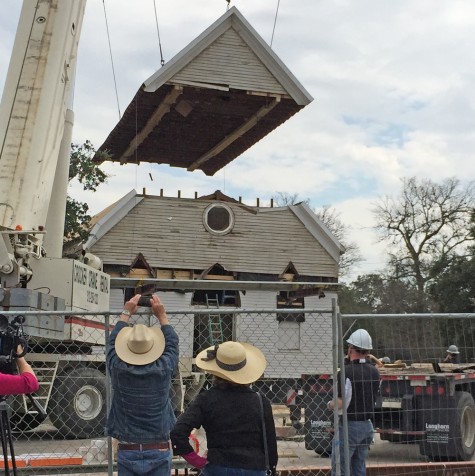
- 2015 – Historic B'nai Abraham Synagogue, established in 1885 in Brenham is relocated to the Dell Jewish Community Campus. It becomes the home of Congregation Tiferet Israel, an Orthodox congregation.
- 2016 – Shalom Austin becomes the official corporate brand of the Federation, Jewish Community Center, Jewish Family Service, and Foundation.
- 2021 – Congregation Beth Israel suffers an arson attack; rebuilding becomes a symbol of resilience and solidarity.
- 2023 – Major Jewish Community Campus expansion is completed.
- 2023 – Austin Area Eruv is completed. It is a symbolic boundary allowing Orthodox Jews to carry items and push strollers on Shabbat within a designated area, without violating religious laws.
- 2023 – Austin's Jewish community responds with shock and grief after the October 7 Hamas attacks on Israel, which killed more than 1,000 people—including 364 civilians at a music festival—and resulted in the taking of approximately 250 hostages. Community-wide gatherings provide space for mourning and solidarity, and in the months that follow, the tragedy strengthens communal bonds in Austin, reinforcing Jewish identity, continuity, and mutual support in line with broader national trends.
- 2024 – Jewish population reaches an estimated 25,000–30,000.
- 2024 – Shalom Austin's Jewish Family Service completes construction of its building and moves its primary office to the Dell Jewish Community Campus.
- 2025 – The Living the American Jewish Experience lecture is established as a community-wide program to bring leading thinkers to Austin, fostering critical reflection on the key questions facing the American Jewish community today.
- 2025 – Greater Austin Jewish Historical Society forms to discover, preserve, and interpret the Jewish experience in Austin by offering resources, programs, and partnerships that illuminate and unearth our shared past and inspire future generations.
About The Topic Photo
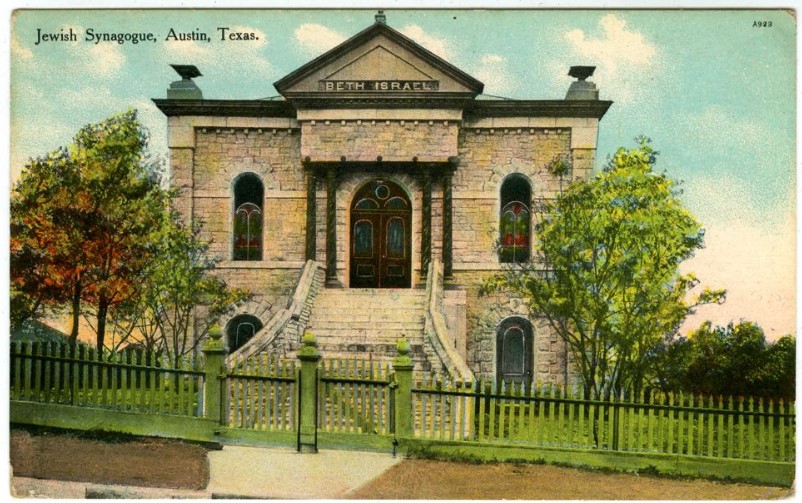
Congregation Beth Israel's First Synagogue, 1884
This historic postcard shows the first building of Congregation Beth Israel (House of Israel), the oldest Jewish congregation in Austin, Texas. The congregation was founded on September 24, 1876, when a group of 30 Jews gathered at Odd Fellows Hall. Reporting on the inaugural gathering, the Weekly Democratic Statesman commented: "All the larger cities of Texas have their temples for Jewish worship, and we can see no reason why Austin should not keep company with them."
In May 1877, the new congregation purchased a building site at 11th Street and San Jacinto Boulevard for $2,500. Construction proceeded by fits and starts due to economic challenges following the Civil War and the end of Reconstruction. After numerous fundraising events—including a "Grand Masquerade Ball" at Millett Opera House in 1880—and a crucial $2,500 loan from a local bank in 1882, the building was finally completed in 1884, eight years after the congregation's founding.
The synagogue was an austere two-story stone block that resembled a secular meeting hall, except for its distinctive large exterior stairway leading to the main entrance on the second floor where the sanctuary was located. On each side of the arched entryway were two slender columns set flush against the wall, carrying a projecting block topped with a pediment bearing the words "Beth Israel" carved along the bottom.
As the congregation grew after World War II, the building became too small. By 1953, Beth Israel had 225 members and 96 religious school students. During High Holiday services, when the full congregation stood up and sat down, the building would shake—a sign of structural problems. In 1957, the congregation moved to a new location on Shoal Creek Boulevard, where it remains today. The stained glass windows from the original 1884 synagogue were stored, later found at a flea market, and eventually installed in a chapel of the new building in 1987.