



Image: Shalom Austin
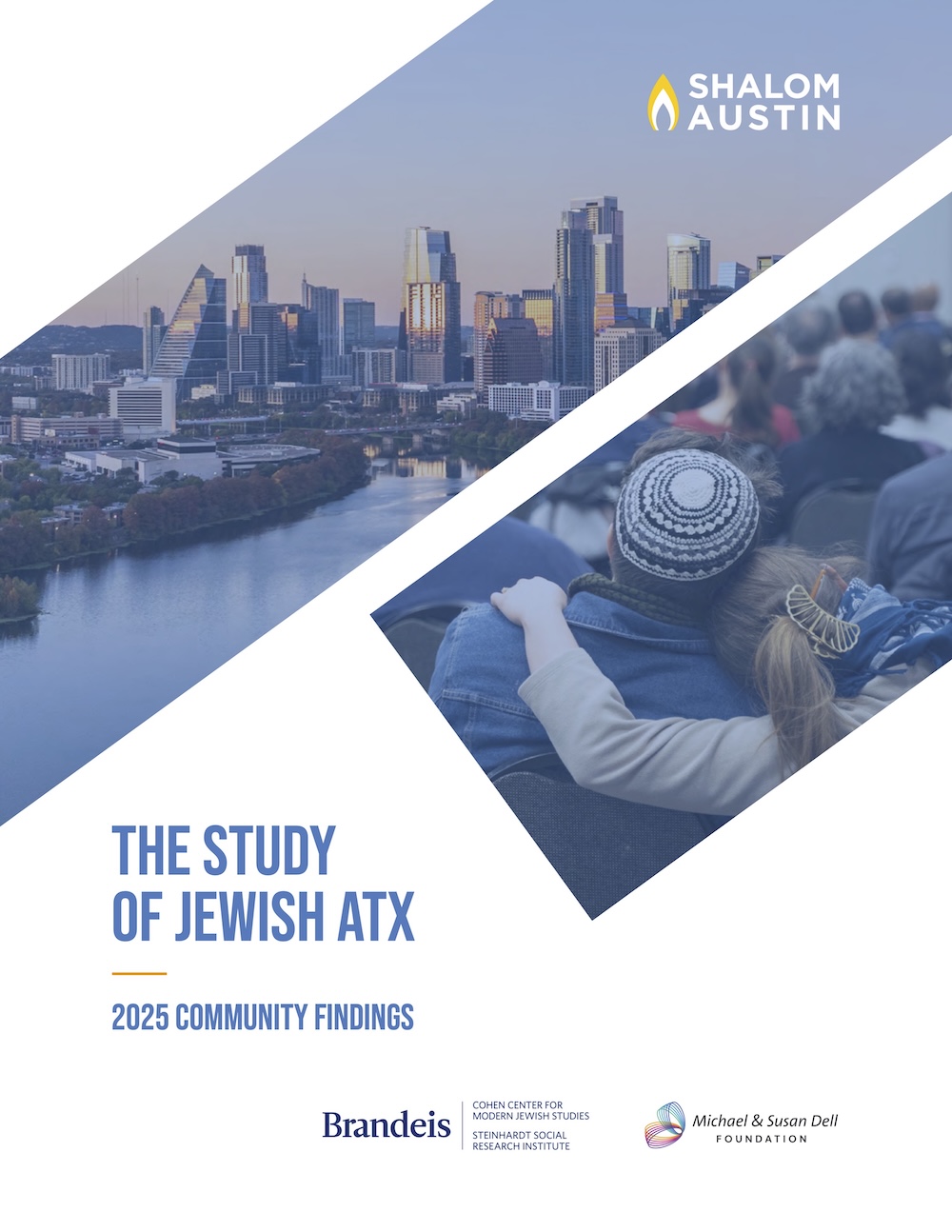
Just one in ten Jewish adults in Greater Austin was raised here. Four in ten have lived in the area for fewer than a decade. That volatility — a community still arriving, still deciding whether to stay — is the headline finding of the 2025 Study of Jewish ATX, the first comprehensive demographic study of the Greater Austin Jewish community. Shalom Austin commissioned the study with support from the Michael & Susan Dell Foundation; it was conducted by the Cohen Center for Modern Jewish Studies at Brandeis University, in partnership with NORC at the University of Chicago and the University of New Hampshire Survey Center.
A Baseline, Not a Trend Line
Because no earlier study of this kind has been done in Austin, the 2025 Study of Jewish ATX is a baseline rather than a trend line — it describes the community as it stands today, with nothing locally to compare it against. According to the study, Greater Austin (Bastrop, Caldwell, Hays, Travis, and Williamson Counties) is home to about 39,600 households and 86,700 individuals connected to Jewish life, including 62,400 who are Jewish and 24,300 who are not. Jews make up about 2.5% of the five-county population.
A Community of Newcomers
The study's clearest finding is how recently most of the community arrived. Only 10% of Jewish adults were raised in Greater Austin. Forty-four percent have lived there fewer than ten years — 23% for zero to four years, 21% for five to nine — while 31% have been there two decades or more. Most newcomers moved from California, other Texas cities, and New York, and the study found their decisions were driven mainly by jobs and lifestyle rather than by anything specific to Jewish communal life. That same instability cuts both ways: about one-third of Jewish adults told researchers they will “definitely” or “probably” move away within three years. That pattern is a sharp contrast with the long-established Jewish communities of the Northeast and Midwest, where many adults were raised in the community they still live in.
Intermarriage and the Next Generation
Intermarriage is far more common in Austin than nationally. Fifty-four percent of coupled Jewish adults in the study have a non-Jewish partner, compared with a national rate of 42% found by the Pew Research Center. Of the roughly 16,000 children being raised in Jewish households in Greater Austin, 11,200 — 70% — are considered Jewish by their parents, and 7,700, or 48%, are raised exclusively Jewish. The study found that 51% of Jewish children have intermarried parents, 39% have two Jewish parents, and 10% have a single Jewish parent — figures that make the choices interfaith families make about Jewish upbringing central to the community's future size.
Strong Friendships, Weak Institutions
Formal affiliation is low. Just 15% of households belong to any congregation, and only 5% pay dues to a local synagogue; 26% belong to a non-congregational Jewish organization, and 9% are Dell JCC members. Instead, friendship is doing most of the work of connecting people: 72% of respondents named friends as their top source of Jewish community. Even so, a sense of belonging is thin — only 29% feel a sense of belonging to a Jewish community in Greater Austin, with just 8% feeling it very strongly, while 40% feel more connected to a Jewish community somewhere else. Eighty-five percent report at least one barrier to the kind of Jewish participation they want, and that barrier is sharply regional: location is cited as a barrier by just 8% of households in the Central-West region, compared with 48% in the West. Researchers sorted adults into five engagement levels: Minimally Involved (22%), Occasional (27%), Personal (10%), Communal (31%), and Immersed (10%).
Antisemitism, Economics, and Israel
Twenty-one percent of Jewish adults said they were personally targeted by antisemitism in the past year, and of those, 79% did not report the incident to anyone. Fifty-seven percent said they had avoided at least one behavior out of fear of antisemitism, most commonly avoiding any mention of Israel. Adults age 18 to 34 reported more incidents and more avoidance than older adults, but less overall concern about antisemitism as a problem.
The study also found real financial strain: 21% of households describe themselves as financially struggling, ranging from 8% in the East region to 30% in the North, and 37% carry credit card, student loan, or medical debt. Among adults 40 and older, 22% said they would “definitely” consider a Jewish senior living facility if one were built in Austin.
On Israel, 69% of respondents feel at least somewhat attached to the country, and 58% have visited. The study also counted an Israeli-American Jewish presence in 16% of households, representing about 10,800 people — a sizable and distinct piece of the broader community.
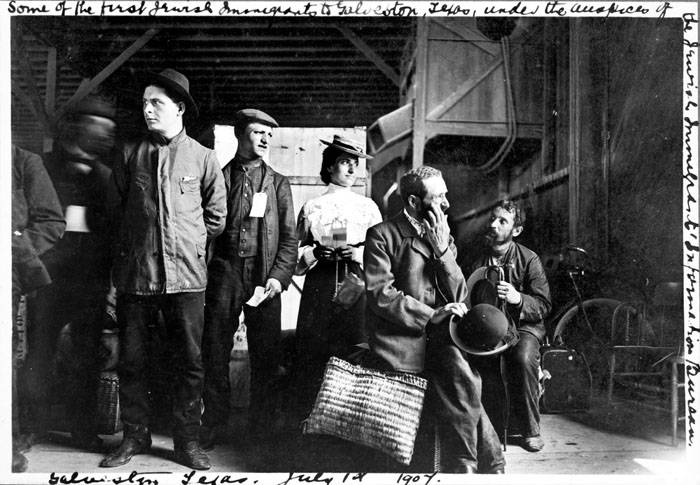
The 2025 Study of Jewish ATX doesn't have an earlier Austin survey to measure itself against, so it can't yet say what has changed locally — only what the community looks like today, compared with Jewish communities nationally. For a longer view, Shalom Austin's historical timeline traces organized Jewish life in Austin back to 1876, long before anyone attempted to count or survey the community this way.
Sources
- Study of Jewish ATX landing page — Shalom Austin
- Executive Summary (PDF) — 2025 Study of Jewish ATX
- Full Report (PDF) — 2025 Study of Jewish ATX
- Shalom Austin historical timeline, 1876–present