
_-_002.jpg)

November 20, 1995 · Austin American-Statesman
IBM's Florida Relocation Raises Jewish Amenity Concerns as Austin–Boca Raton Comparison Runs
View original source →Full Transcript
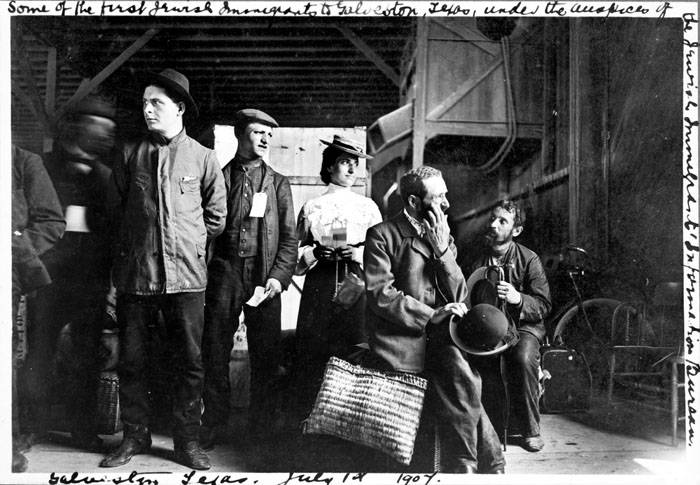
Dearth of Jewish amenities worries IBM transferees ■ Floridians accustomed to Jewish day schools, kosher butchers, more congregations By Juan R. Palomo | American-Statesman Staff Live music, the Hill Country, the lakes and a laid-back atmosphere may be inducements enough for those trying to decide whether to relocate to Austin. But all that doesn't erase concerns for a group of IBM employees who are worried about issues that more directly affect their families. Where, for example, are Austin's Jewish neighborhoods? Or the kosher butchers and restaurants? Or the Jewish day schools and the Orthodox synagogue? The answer to all of the above is, there are none. And because of that, some of the estimated 150 Jewish families among the 900 IBM employees who are being asked to relocate to Austin from Florida next April might decide to stay in the Boca Raton area. Normally there would not be that high a percentage of Jews in a group that size, since Jews are a relatively small minority of the country's population — about 2.3 percent. But the Boca Raton area of South Florida has one of the highest concentrations of Jews in the country and will make up about 16.7 percent of the IBM group, according to estimates by the Austin Jewish Federation. They would be moving to an area with a relatively small Jewish population: Slightly more than 1 percent of Austin's population (about 6,000 people) is Jewish. Even if, as some people estimate, only about 75 percent of those families decide to move here, that could See Austin's, A4 — continued from A1 — Austin's Jewish community tries to reassure Floridians mean about 110 new Jewish families in the area, a significant number when you consider that the city's only two established congregations, Agudas Achim and Temple Beth Israel, have memberships of about 470 and 700 families, respectively. Leaders of both congregations say the new families wouldn't be a burden and can be accommodated, but they would definitely make a difference. Agudas Achim, in particular, would be forced to add new religion classes because its current ones are already crowded, said Rabbi Martin Pasternak. On the other hand, more active Jewish families could mean that programs and services that have not been possible so far will now be closer to becoming a reality. For decades, Austin Jews have longed for a Jewish day school, the Jewish equivalent of a parochial school, but the population numbers just haven't been there to support one. "Maybe this will give us the critical mass we need for a school," says Mike Abkowitz, Agudas Achim's president. More families could also help the longtime dream of establishing a major Jewish community center, which is under way on 40 acres in Northwest Austin. The first phase is expected to open within two years. It's likely not all of the families coming here will affiliate with a congregation, but Jewish leaders say they expect the affiliation rate of those families to be high. Abkowitz says that because of the high concentration of Jews in Boca Raton, many Jews there do not feel a need to affiliate in order to feel they are in a Jewish environment. But in Austin, he said, "if you want to feel that you are in a Jewish environment, you have to affiliate." One of the main reasons some of the families might opt against coming to Austin is that there is no established Orthodox synagogue here for those who follow Jewish traditions most closely. Austin's two major groups belong to two other Jewish movements — Reform (Beth Israel) and Conservative (Agudas Achim). Several other Jewish congregations have formed in the area, but they are relatively small. For example, while there is a small Orthodox community that is in the process of establishing a synagogue, it has yet to choose a site. IBM spokeswoman Jo Sager said she had heard that some Jewish programmers were concerned about the lack of an Orthodox Jewish day school in Austin. Checking out Austin When IBM employee Kathy Perlman traveled to Austin with her husband, Jeff, who is Jewish, they listened to the president of the city's Jewish Federation describe what the city had to offer. "The only thing they said was that if you are Orthodox, there weren't many neighborhoods near (the synagogue), and you'd have to drive on the Sabbath," Perlman said. Perlman has not given her decision to the company yet, but she is thinking of staying in Boca Raton because of family ties. Some Orthodox newcomers who might decide to attend Agudas Achim, says Robert Cullick, chairman of the Austin Jewish Federation's newspaper, will find "an awakening" when they discover it allows women to lead its daily service. For East Coast Jews, coming to a place like Austin, which doesn't even have an identifiable Jewish neighborhood, could be a culture shock. "You meet people here who have never met a Jew or don't know they have," said Cullick. "That will be strange to them." Jewish leaders are responding aggressively to help ease the Floridians' trauma and fears. Barry Silverberg, executive director of the Jewish Federation, said the group is setting up an 800 number and publicizing in Boca Raton's Jewish newspapers. It has also set up a site on the Internet computer network that includes information about Austin and its Jewish community. The federation also sent members to Boca Raton to meet with families, and it makes certain that members of all the groups that welcome the IBM families flown here to check out the city. "We are trying to make sure all who do choose to come know they are coming to a place that has a good quality of life and that they will be part of a thriving Jewish community," he said. Linda Baker recently traveled to Florida on family business and volunteered to meet with IBM families while there. The people she met with, she said, wanted to know that they could have a community here in which they would feel comfortable worshiping and socializing. On the more practical level, she said, they wanted to know whether it's possible to maintain a kosher home in Austin. Her answer: It's not easy, but it is possible. Pasternak, too, has talked to a number of IBM employees. What does he tell them? "To be prepared for change and for the fact that you can't be prepared for everything," he said. "That they have to be flexible, but that they should remember they're coming to a community that cares." Stephen Pounds of The Palm Beach Post, West Palm Beach, Fla., contributed to this report. [Sidebar] Shalom, pardner How much difference is there in the size of the Jewish communities in Boca Raton and Austin? One measure: One synagogue in Boca Raton has nearly 4,000 members — and there are only an estimated 6,000 Jewish residents in Austin. Here's how the areas compare: | Boca Raton-Delray Beach | Austin Jewish population | 116,000 | 6,000 Major congregations | 18 | 2 Kosher food stores | 1 | 0* Kosher restaurants | 2 | 0 Jewish day schools | 2 | 0 Jewish child-care centers | 12 | 2 * In Austin, one grocery store has a kosher bakery; several stores have kosher food sections; and there are kosher food co-ops as well. Source: Jewish federations in Austin and southern Palm Beach County; Austin Jewish community Internet sites. (AA-S)