
_-_002.jpg)
July 21, 1996 · Austin American-Statesman
Chip Slump and Rove Profile Share Page with Story on Austin's Rapidly Growing Jewish Population
View original source →Full Transcript
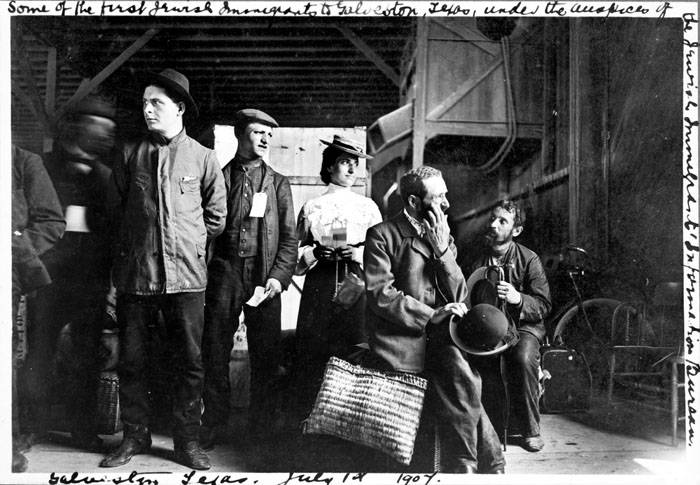
A rising number of Jews are calling Austin home ■ Influx makes city's Jewish community one of the fastest growing in the U.S. By Juan R. Palomo | American-Statesman Staff Mark Smith could have gone anywhere in the country after completing his residency in Memphis. The new pediatric surgeon had a number of offers in other cities. Yet Smith, 37, chose Austin, even if coming here meant he would earn less money than if he had gone elsewhere. "This is where I wanted to be," said Smith. "I am the happiest person in the planet." Smith, his wife, Kathy, and their three children arrived here a year ago. They are among hundreds of new Jewish residents who have made Austin's Jewish community one of the fastest growing in the nation. That population grew by 28 percent during 1994, according to new figures from the American Jewish Committee. The committee's American Jewish Year Book puts Austin's Jewish population at 6,400, up from 5,000 a year before. The Austin Jewish Federation, which helped compile the figures, estimates the number at more than 7,000 now. "Without question, Austin is clearly one of the fastest-growing Jewish communities, and our future is very, very bright," said the federation's executive director, Barry Silverberg. "I can see us being a major American Jewish community, having significantly more people than we have now, in not that many more years." Smith said he chose Austin, where he lived as a child, even See Jewish, A13 — continued from A1 — Jewish population in Austin grows at rapid rate ■ Austin's high-tech industries, low home rates seen as factors though he knew the area has fewer amenities for Jewish families than cities with older, more established Jewish communities. "We've lived in towns with larger Jewish communities that have Jewish community centers and such, but I can't think of any place I'd rather be," he said. "This city has the kind of environment I want my children to grow up in." Longtime Jewish residents welcome the growth because they see it as providing the impetus — and the financial resources — for moving forward on long-sought projects, such as a Jewish day school and the Jewish community center, the groundbreaking for which will be at the end of the year. But they also worry that existing facilities and services may not be enough. Temple Beth Israel, for example, is already "bursting at the seams," says member Sandy Dochen, president of the Jewish Federation of Austin. High-tech attraction Silverberg attributes the growth to Austin's high-tech industries, which have attracted workers from areas with more Jews. A case in point is the decision by IBM to relocate an entire division to Austin from Boca Raton, Fla., which has one of the nation's highest concentration of Jews. Steve Epstein, one of the IBM transferees, says that while he misses the ocean and the walks on the beach with his two boys, he doesn't miss what he calls the "pervasive urbanization" of South Florida. "We can get in the car and be out in country in 15 or 20 minutes," he said. "In Florida, the development was so complete that we'd have to drive so far north or so far south to get into open country." What they like most is the friendliness of the natives. "I noticed it very much the first week or two, how friendly people are as you pass them in the street or at the store — they're always ready to help," said Epstein. "It was a surprise, but a very pleasant surprise." Patricia Jacobson moved here a little more than a year ago from Santa Fe, N.M., with her husband, Jay, and their 5-year-old daughter. "I'd never lived in Texas and I never thought I'd live in Texas, but once I got here, I really liked it," said Patricia Jacobson. If there are any drawbacks, she said, it's the summer heat. "But I don't mind it," she adds. Another pleasant surprise for the new arrivals is home prices. While longtime Austinites might be in shock at the high cost of housing in recent years, people from higher-priced areas such as South Florida, the Northeast and the West Coast find Austin's home prices more than reasonable. The Epsteins, for instance, were able to buy a house in Northwest Austin that is twice as large as the one they left behind in Boca Raton for not much more money. For the first time, the family is living in a two-story house, something the boys — aged 9 and 6 — think is a lot of fun. "I'm trying to teach them that they don't have to run down the stairs," said Karyn Epstein. Florence and Jerry Levinson moved from Corpus Christi last year so he could join a dental school friend in his practice here. The Levinsons went to the University of Texas in the 1950s, but neither was involved in the Jewish community, so they didn't know what to expect when they moved here. "We didn't realize it was so large," she said. "We were so used to seeing 25 or 30 people in the synagogue at Sabbath services in Corpus. Here, it's like the High Holy Days every week." Another surprise, she said, was the large number of younger people who had moved here from other parts of the country. Some couples came here because of job transfers, Levinson said, but others were people from Houston or Dallas who wanted to get away from the big-city bustle. "That's what our son and daughter-in-law wanted when they moved here from Dallas," she said. Grumble or reach out The growth has not gone unnoticed. One resident who has lived here for a number of years said it used to be that people knew everybody else in the Jewish community. "That's not the case anymore," she said. "I find myself asking, 'Who are these people?' when I go to a community function." Dochen of the Jewish federation said old-timers have a choice: grumble about the lack of intimacy as a result of the newcomers or reach out to make new friends. "It's an exciting time because we have so much talent and diversity coming here," he said. Dochen said in the past most Austin Jews were either in retail or worked for the University of Texas or state government — most Jewish students went to one of two or three high schools. "Now it's so different," he said. "We're so diverse, economically, and we have a sizable Jewish contingent in Round Rock, and it's growing in places such as Pflugerville and West Lake." The growth continues. Silverberg, for instance, says he takes one or two calls a week from Jews seeking to relocate in Austin. Agudas Achim, the city's conservative congregation, reports a growth of about 50 families per year in the past couple of years. And as more Jews come to Austin, there are more services available to them. For example, the Austin Jewish Community Day School will open its doors in August 1997 to children entering kindergarten and first grade. For years, efforts to establish a day school that would integrate Judaic and secular curriculums have been unsuccessful because there were never enough families to support such a school. The arrival of new, younger families has changed that. Some of the new residents say they don't mind the lack of amenities. "I grew up in a small Southern town where the only Jews were me and my brothers and my sister," said Jay Jacobson. "So I can't say we have missed a thing. You can have a good life wherever you live. Austin has a good infrastructure, and you have to avail yourself of the opportunities it offers." If the city's Jewish population continues to grow at a rapid rate, Austin could conceivably edge out San Antonio as the Texas city with the third-highest Jewish population by the end of the century. San Antonio's Jewish population is about 10,000. Statewide, the Jewish population remains below 1 percent. Only about 110,000 of the state's 18.4 million people are Jewish, according to the American Jewish Committee. In contrast, some 9.1 percent of New York's population is Jewish. [Sidebar] Growing numbers ■ Jewish population in Texas, January 1995: 110,000 (0.6 percent of total state population) ■ Jewish population of major Texas cities: City | 1995 pop. | Prcnt. of total Texas Jewish population Austin | 6,400 | 5.8 Dallas | 35,000 | 31.8 El Paso | 4,900 | 4.5 Ft. Worth | 5,000 | 4.6 Houston | 42,000 | 38.2 San Antonio | 10,000 | 9.1 Source: American Jewish Year Book, 1996 [Photo caption] Jay and Patricia Jacobson moved to Austin with their 5-year-old daughter, Hannah, more than a year ago from Santa Fe, N.M. The Jacobsons are part of Austin's growing Jewish community. (Jason Doiy/AA-S)