



Note: The Greater Austin Jewish Historical Society welcomes additional information or revisions sent to info@austinjewishhistory.org.
The story of today's organized Austin Jewish community begins with efforts to meet immediate human needs and gradually expands into a shared structure for philanthropy, education, recreation, culture and social services. Across generations, Austin's Jewish residents created and reshaped institutions to care for one another and sustain communal life. The path to today's Shalom Austin follows both the development of Jewish charitable giving and the growth of a central organization capable of bringing the community's many activities together.
An Early Attempt: The Hebrew Benevolent Association (1872)
Austin's first Jewish charitable organization, the Hebrew Benevolent Association, was organized in 1872 with B. Melasky as president. The Association tried to raise funds for a synagogue, but the effort failed, and it subsequently disbanded. Although that early organization did not endure, it marks an initial attempt to organize Jewish communal support in Austin.
The Hebrew Benevolent Society (1907–1924)
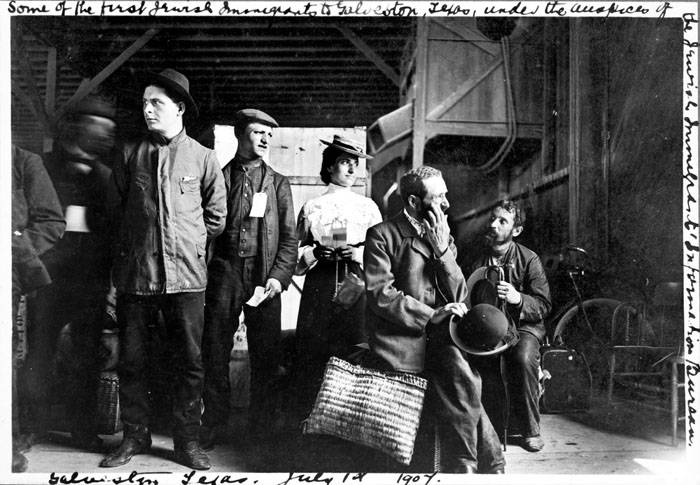
In 1907, during the height of East European Jewish immigration, the Hebrew Benevolent Society was established to help poor Jewish immigrants and other Jews in need. Led by Joe Koen and Moses Davis, the Society provided immigrant and emergency relief and became Austin Jewry's first central local charity. It is the antecedent of today's Shalom Austin.
During its existence from 1907–1924, the Society supported Jewish families arriving in Texas and seeking a place in its economic and social life. For immigrants who often lacked broader local support, organized charity offered practical assistance and a foundation for communal solidarity.
Its work belonged to a larger American tradition of Hebrew benevolent societies: early Jewish welfare groups that often preceded formal synagogues and charities in their towns. Such organizations aided the poor, helped immigrants settle and, in some communities, supported burials and other basic services. They became precursors to later federations, welfare organizations and congregational structures.
The Federation of Jewish Charities (1924)
A new stage began in 1924, when the Hebrew Benevolent Society was absorbed into the newly formed Federation of Jewish Charities in Austin. This consolidation brought charitable fundraising and giving under a single organized body, drawing together different strands of Jewish philanthropy to support local welfare needs and community projects. The change extended beyond a new name. Relief directed principally toward needy individuals became part of a more coordinated approach to community philanthropy and federated fundraising.
Austin's development reflected a broader movement in American Jewish life during the early 20th century. As Jewish communities grew and diversified, federative organizations offered a way to organize giving and respond to shared social needs. In Austin, this central structure would help coordinate social support, cultural activities and assistance during crises.
The Jewish Community Council of Austin (1939)
The next chapter centers on the Jewish Community Council of Austin, formed in 1939, succeeding the Federation of Jewish Charities. The American Jewish Yearbook reports that the Council was created in 1939 and reorganized in 1956. Dr. Morris Polsky (1908–2005) was a founder and President of the Jewish Community Council of Austin.
The fundraising history adds another layer to this chronology. The Austin Jewish Federation / Jewish Welfare Fund is identified as a fundraising organization or function. By the mid-1950s, these names appear in the record of the community's united fundraising operation. They help explain why “Federation” appears in Austin's history well before the Council formally adopted that identity in 1989.
The 1956 Reorganization
A May 24, 1956 Austin Statesman article announced the formation or reorganization of the Jewish Community Council of Austin and named its officers. Dr. Morris Polsky served as President. The Vice presidents were Dr. Ernest Goldstein, Jim Novy and Mrs. Milton T. Smith. Gene Ravel was Recording secretary, Mark Silverstone was Corresponding secretary, and Mrs. Gus Schnell was Treasurer. These leaders gave the reorganized Council a structure for coordinating communal activities as well as charitable support.
The article identified the Council's largest activity as the Jewish Welfare Fund, which it explicitly described as “formerly known as Austin Jewish Federation.” The Fund's purpose was united fundraising for local, national and overseas Jewish needs. In the reorganized structure of 1956, the Council became the broad communal umbrella, while the Jewish Welfare Fund managed united fundraising. Over time, the Council's responsibilities grew to include community planning, education, recreation and social services.
Polsky's description of the Council's purposes in the 1956 Statesman article anticipated that broader role. He spoke of philanthropic, cultural and service activities and envisioned a community survey, a bulletin and calendar, a day camp and other community-wide programs. The emerging organization was becoming a place where the community could plan together and build services alongside its charitable campaigns.
Growing Community Institutions (1955–1984)
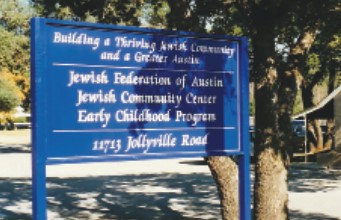
The Jewish Community Center, established in 1955, was part of this expanding communal life. Another means of connecting residents appeared in 1981, when The Jewish Outlook began as a Jewish Community Council publication. In 1984, the Community Council moved its operations to 11713 Jollyville Road, where the JCC and Early Childhood Program developed. Together, these developments gave the community places to gather, programs for families and a publication through which to share information.
The Jewish Federation of Austin (1989)
In 1989, the Jewish Community Council of Austin was renamed the Jewish Federation of Austin. The change marked the Council's formal adoption of the Federation identity in the modern organizational lineage. It was not the first use of the name in Austin: the Austin Jewish Federation had already appeared in the fundraising history of the 1950s. Rather, the renaming brought the Council's broader communal work under the Federation name.
Reimagining Governance (1996)
The question of how best to organize that work became central in the following decade. In 1996, the Federation adopted Building a Thriving Jewish Community: Reconsidering the Governance and Structure of the Jewish Federation of Austin. The proposal called for an integrated governance and operating model. Barry Silverberg proposed the model during his 1995–1998 tenure as the Federation's Executive Director, offering a framework for bringing related communal functions into a single organization.
The Jewish Community Association of Austin (2000)
That approach took institutional form in 2000 with the creation of the Jewish Community Association of Austin (JCAA). The integrated nonprofit brought together three previously distinct communal functions: the Jewish Federation of Austin, the Jewish Community Center and Jewish Family Service. Shalom Austin's own history confirms this structure and connects its creation with the opening of the Dell Jewish Community Campus.
The concept had national significance because Austin was moving toward a single integrated communal organization from a collection of separately governed Federation, JCC and JFS organizations. Fundraising, community programming and family services could now be understood as connected parts of a common organizational structure. This integration gave institutional form to the approach proposed in 1996.
The Path to Shalom Austin (2014–2016)
A fourth principal component was added in 2014, when the Jewish Foundation of Austin and Central Texas was established. The transition to the name Shalom Austin unfolded over the next two years. In 2015, the Jewish Community Association of Austin changed its legal name to Shalom Austin.
By 2016, Shalom Austin was being presented as the integrated organization comprising the Jewish Federation, Jewish Community Center, Jewish Family Service and Jewish Foundation, with Shalom Austin fully established as its corporate and organizational brand.
Two Intertwined Histories
Seen across this long history, two closely connected stories lead to today's Shalom Austin. The first follows Jewish philanthropy from the Hebrew Benevolent Society through the Federation of Jewish Charities, the Jewish Welfare Fund and Austin Jewish Federation, and into the modern Federation. The second follows the central communal organization from the Federation of Jewish Charities through the Jewish Community Council of Austin, the Jewish Federation of Austin and the JCAA, and finally to Shalom Austin. Their functions overlap, merge and change over time, which helps explain why institutional histories sometimes identify different beginnings — 1872, 1907, 1924, 1939, 1954, 1956, 1971 and 2000.
From the Hebrew Benevolent Association's early effort in 1872 to the integrated organization known as Shalom Austin, the community's institutions developed through successive efforts to meet changing needs. Immigrant relief grew into coordinated philanthropy, and communal coordination expanded into programs and services that brought people together. Today's structure carries forward that history of organized care and shared responsibility.
There is more worth uncovering, and the Greater Austin Jewish Historical Society welcomes added information or revisions sent to info@austinjewishhistory.org.